From the University of Western Australia Newsroom. Read the full press release here.
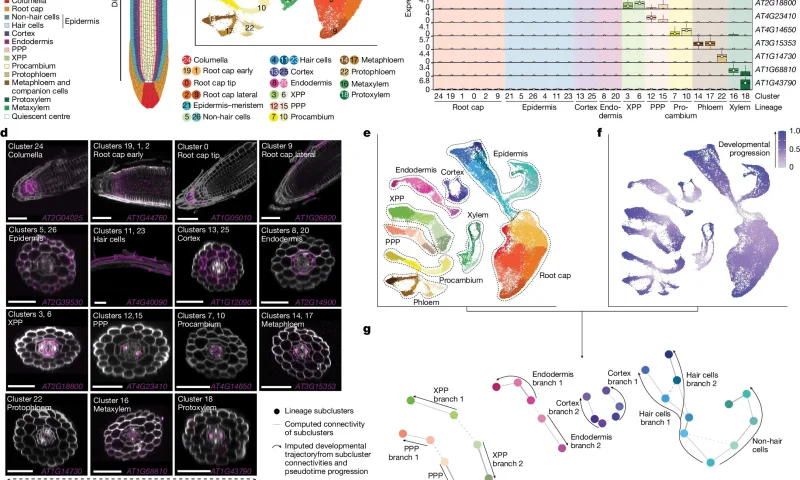
Scientists have discovered a hidden layer of identity in plant root cells: an “environmental mode” that switches on in some cells and becomes more common when water is scarce.
Led by Dr Marina Oliva and Professor Ryan Lister, from the ARC Centre of Excellence in Plants for Space and The University of Western Australia’s School of Molecular Sciences, the study published in Nature examined how plants cells responded to drought conditions.
Lister says the discovery is important for agriculture on and off-Earth.
"Working out how plants switch cells into this state will give us a new understanding of how they cope with challenging environments, and a future target for tuning plant performance both in the field and in controlled environments on Earth and in space.”
As part of the centre's work in controlled environment agriculture, Plants for Space researchers are exploring the fundamental mechanics of how plants respond to stress. This research includes ‘re-engineering’ plants to be able to remove redundant energy-intensive processes and accelerate growth, enhancing nutrient and water use-efficiency, optimising salt tolerance, and creating sustainable uses for all plant parts.
The study involved researchers at La Trobe University, the Walter and Eliza Hall Institute, A*STAR Singapore and Zhejiang University.